
A message comes in while you’re loading the truck. You read it, plan to reply after the next stop and keep going. Then another call comes in. By the end of the day you remember the customer, but not whether anyone answered.
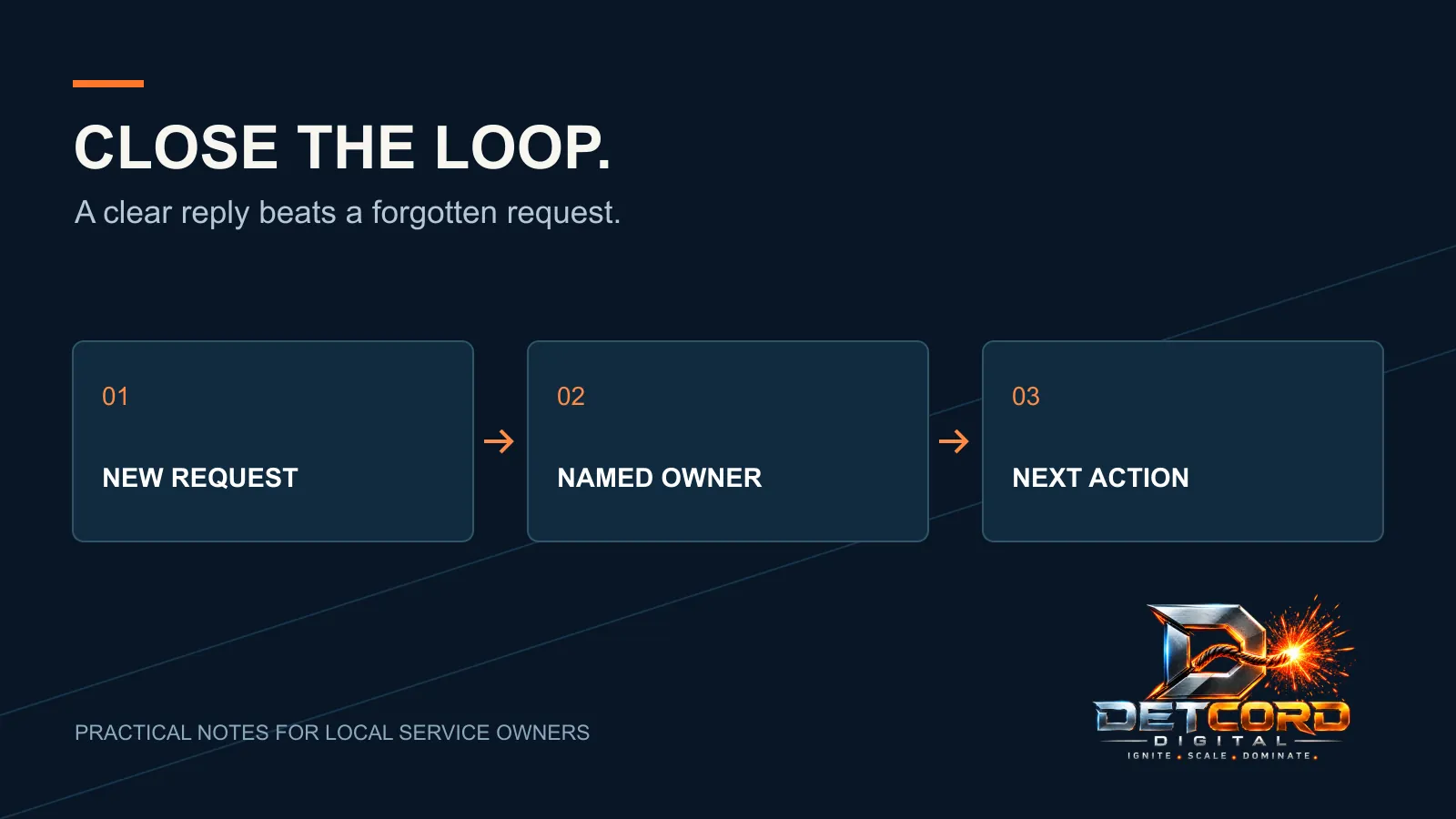
That’s a process problem, and you can fix it without buying a complicated system. Every request needs a home, an owner and a next action. Faster follow-up gets a lot easier once you stop relying on memory to connect those three.
You don’t need a stopwatch rule to get started. You need a routine that gives the customer useful information and shows your team what still needs attention.
A “got it” is not an answer
A quick acknowledgment tells someone their request arrived. An answer tells them what happens next. Both are useful, but they’re different jobs. “Thanks for contacting us” shouldn’t make anyone think they’re booked.
Write your first reply around what you actually know. Confirm the request, ask for missing details and give a realistic idea of when you’ll be in touch. If you can’t offer an appointment yet, say so. Don’t fill the gap with “someone will be there soon.”
For example, a plumbing company might confirm it got a repair request and ask for the service address before talking about timing. That’s an illustration, not a script. Your questions should fit your service area, your capacity and the work you take.
Give every request one home
Calls, website forms and social messages land in different places. Decide how each one becomes an entry on a single working list. A shared inbox or a simple customer system may be plenty. What matters is that a request doesn’t vanish because it came in through an awkward channel.
Keep each entry short and useful: customer, how to reach them, what they need, when it came in, who owns it, next action and status. Skip extra personal details just because the software has a field for them.
Check for duplicates first. A customer who calls after filling out a form is probably asking about the same job. Link the two, so two people don’t make two different promises about timing or price.
Name an owner before you add reminders
A reminder can’t fix an unclear handoff. Decide who owns each request and who covers when they’re out. If you work alone, pick safe times during the day to check. Follow-up should never mean reading messages while driving or running equipment.
When ownership changes, write it down. “The office will handle it” is less useful than a name and a next step. Keep internal notes separate from customer messages, so nobody accidentally texts shorthand to a customer.
Set a response expectation your team can actually keep. During a Michigan storm or a busy heating week, capacity changes fast. Update your public message when the normal routine doesn’t fit. An honest expectation beats an automatic promise your crew can’t keep.
Automate a step you already understand
Start with the parts that are already consistent. A form can collect basic details. A notification can flag a new request. A reminder can show which entries still need action. You should be able to explain each step without opening the software.
Test the awkward cases: a missing phone number, a duplicate request, a customer who never replies, a job outside your area. Decide how each should look on your list. Make sure no automatic status change marks a conversation done before a person actually handled it.
Every so often, review a handful of recent requests with your team. Find where information went missing or nobody knew who should answer. Fix that spot, then check again after the next busy stretch. Better follow-up comes from clear ownership and useful replies, one request at a time.
Ready for the next step? Read how to automate lead follow-up and review requests and how to choose a CRM for a local service business. Or see how our AI and business automation and custom CRM development work can help, starting with Get Organized.



 AI & Business Automation
 Custom CRM Development