
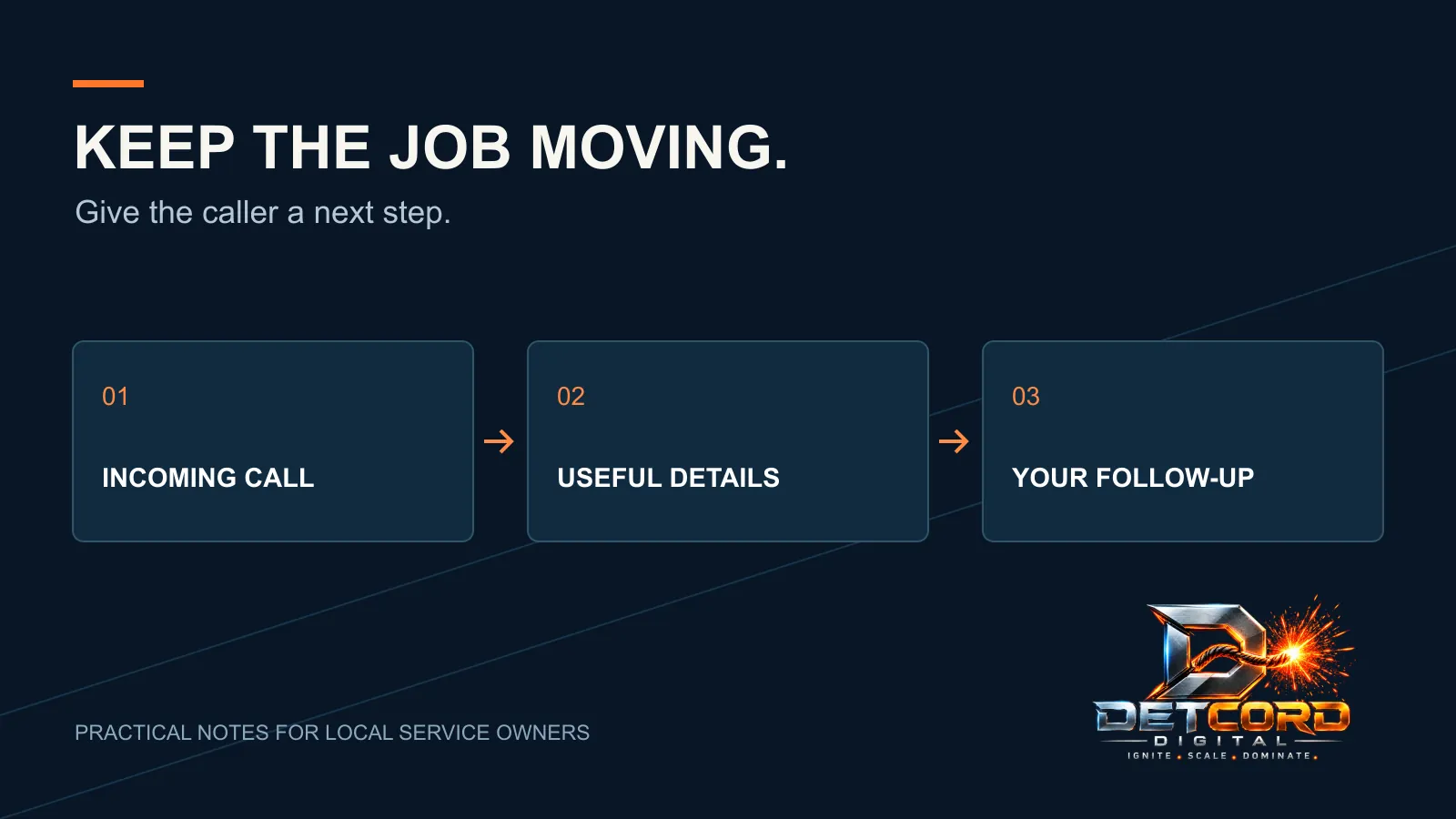
You’re under a sink, checking a furnace or clearing a driveway when the phone rings. Answer it and you stop the job in front of you. Let it ring and the caller decides what happens next. Neither feels good when you run a small service business.
You don’t need a scary statistic to see the problem. Look at your own call history. Which calls did you miss? Who left a message? Which of those requests got a useful answer? That tells you more than anybody’s headline about missed calls.
The goal is simple: give every caller a useful first answer, collect enough to follow up, and protect the work you’re already doing.
Decide what the first answer has to do
The first conversation doesn’t have to solve the job. It needs to find out who’s calling, how to reach them, where the work is and what they need.
Write down the questions you ask before you decide a job fits. Keep the list short enough that it doesn’t feel like an interview:
- Name and callback number
- Service address
- What’s going on
- What they’d like to happen next
Check that the address is inside your service area before anyone suggests an appointment.
Don’t ask callers to diagnose equipment. “The furnace is making a noise” is a starting point for your visit. It’s not a diagnosis, and it’s not a price.
Set the rules before anyone answers for you
Decide what an answering service is allowed to promise. Can it take a request? Offer an open time slot? Does every booking need your OK? Which questions must come straight back to you? Write those rules down in plain words first.
Keep taking a call separate from sending a truck. During a Michigan snowstorm, writing down an address doesn’t mean a plow is on the way. Say so, so the caller doesn’t hear a guarantee you never made.
Same goes for prices. If you can’t quote a repair without seeing it, your answering process should say exactly that. A confident guess just creates an awkward correction call later.
Where AI answering fits
An AI receptionist is one option when you can’t get to the phone. Judge it on the actual conversation, not the voice. Does it collect the right details? Does it follow your rules? Does the caller know what happens next?
Test the easy calls and the awkward ones:
- An address outside your area
- A service you don’t offer
- A caller who gives a different callback number
- A question that needs your judgment
Listen for made-up answers or promises. Then check what actually lands on your phone afterward, and whether you can act on it.
Before you switch anything, ask how your existing number is handled and what setup it takes, like connecting a calendar. Don’t assume every product works the same way, or that a slick demo means your business is ready.
That’s the thinking behind our AI Front Desk, Faye by Detcord: it answers by your rules and sends you the details after each call.
Give every request an owner and a next step
Captured details only help if someone owns the follow-up. Pick who reviews new requests and when. If you work alone, build a safe pause into your day for callbacks. Don’t turn notifications into one more thing to check while driving.
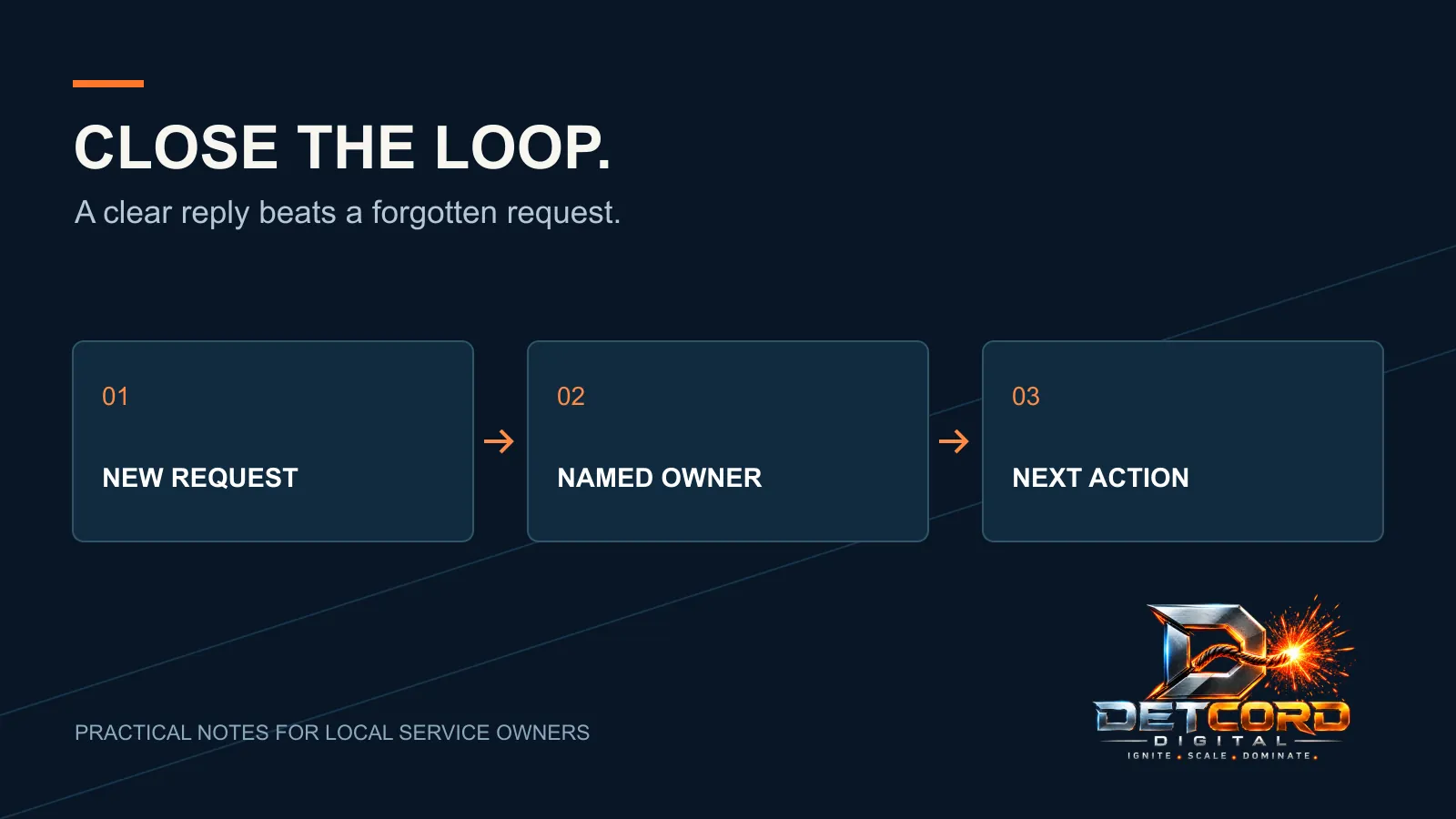
Keep a simple list: caller, request, next action, status. Mark it done only after you’ve responded, or written down why nothing else is needed. A clean inbox can still hide a customer nobody called back.
After a busy day, look back. Were addresses missing? Did a caller expect something you never promised? Fix the questions and rules before you add anything fancier. The best answering plan is one you can trust while your hands are full.
Want to hear one work? Call the Faye by Detcord demo line and listen to it handle a snow-removal call. Then compare it with the questions your business needs answered.
What are your missed calls worth? Put your own numbers into our missed-call cost calculator to see the jobs and revenue at stake each month and year.
Related: How to automate lead follow-up and review requests, Every customer request needs a next action.


 AI Front Desk